 Neighborly Dumpster Rental
Dumpster Permit Miami Dade
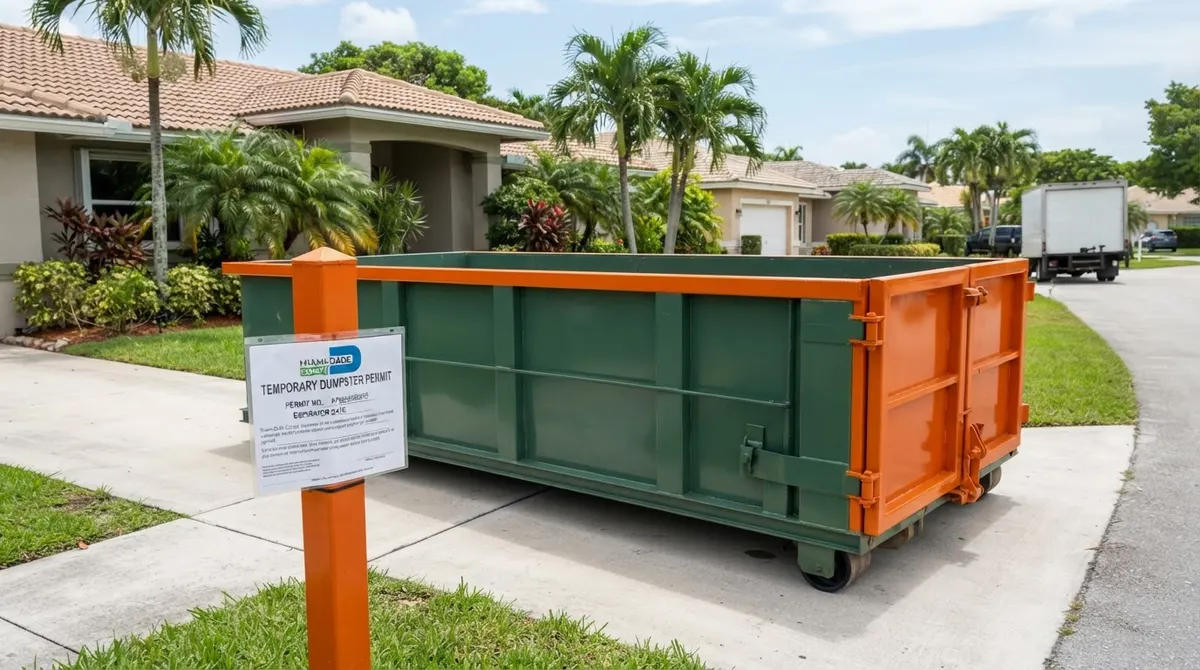
Securing a dumpster permit in Miami-Dade County is often a necessary step for homeowners and contractors planning to place a roll-off container on public property, ensuring compliance with local regulations and maintaining public safety. This permit, typically a right-of-way permit, is mandated when a dumpster occupies any portion of a public street, sidewalk, or alley within the City of Miami or unincorporated Miami-Dade County, impacting areas from Little Havana to Brickell. Understanding these requirements prevents fines and delivery delays for projects involving construction, renovation, or large-scale cleanouts in the Miami area.
When a Permit Is Required in Miami
<p>A dumpster permit in Miami is required when a roll-off container is placed on any public right-of-way. This includes streets, sidewalks, and alleys. For example, a construction project near Jackson Memorial Hospital that needs a dumpster placed on NW 12th Avenue would require a permit from the City of Miami Public Works Department. This requirement applies across Miami-Dade County, encompassing densely populated areas like Wynwood and Brickell, where on-street space is limited, as well as residential zones such as Coral Way and Flagami. If a dumpster is entirely contained within private property, such as a driveway in Coconut Grove or a construction site in Allapattah, a permit is generally not needed. However, even on private property, some Homeowner Association (HOA) approvals might be necessary before placement, especially in planned communities.</p><p>During hurricane season, from June through November, the demand for dumpsters for storm debris and yard waste surges. Projects during this period, particularly those requiring street placement, must factor in permit application times. Heavy rain common in Miami can cause debris, especially organic materials, to waterlog and increase weight rapidly, which can affect tonnage limits, making proper planning crucial for all projects, especially those requiring extended street placement. The City of Miami provides guidelines for temporary obstruction permits to manage these placements safely, as detailed on their official website for public works.</p>
Street vs Private Property Placement
<table><thead><tr><th>Placement Type</th><th>Permit Required?</th><th>Key Considerations</th></tr></thead><tbody><tr><td><strong>Public Street/Right-of-Way</strong></td><td>Yes, from City of Miami Public Works or Miami-Dade County</td><td><p>Ensures public safety and traffic flow. Specific dimensions and placement rules apply. Often requires reflective tape and lights. Examples include placing a dumpster on Calle Ocho for a Little Havana renovation or on Biscayne Boulevard for an Edgewater project.</p></td></tr><tr><td><strong>Private Driveway</strong></td><td>No, typically</td><td><p>Avoids permit fees and application time. Requires sufficient space; a 10- or 15-yard dumpster often fits narrow driveways better in older neighborhoods like Little Havana or Coconut Grove. Must not obstruct sidewalks or neighboring properties. HOA rules might apply.</p></td></tr><tr><td><strong>Construction Site (Private)</strong></td><td>No, typically</td><td><p>Permit-free if entirely within the fenced or designated site. Site access and ground conditions are primary concerns. High water tables in Miami mean careful planning for heavy loads to prevent ground subsidence.</p></td></tr></tbody></table><p>Choosing between street and private property placement depends on several factors, including available space, project type, and local regulations. For example, a full-gut renovation of an aging mid-century home in Coral Way might generate enough debris to warrant a larger dumpster, which may necessitate street placement if the driveway is too small. Conversely, a smaller bathroom remodel in Flagami might easily fit a 10-yard container on a private driveway, avoiding the need for a permit. The decision often involves weighing the cost and time of obtaining a right-of-way permit against the convenience and space limitations of private property.</p>
How to Apply and Typical Costs
<p>Applying for a dumpster permit in Miami involves several steps, primarily through the City of Miami's Public Works Department or the Miami-Dade County Department of Regulatory and Economic Resources, depending on the exact location. The process ensures that temporary obstructions on public property are managed safely and efficiently.</p><ol><li><strong>Determine Jurisdiction:</strong> Identify whether the property falls under the City of Miami or unincorporated Miami-Dade County. This affects which department handles the application.</li><li><strong>Gather Information:</strong> Collect necessary details such as the exact placement address, desired start and end dates for the dumpster, the size of the container, and contact information for the responsible party.</li><li><strong>Complete Application Form:</strong> Fill out the specific right-of-way permit application form. These forms are typically available online through the respective government websites. The City of Miami's Public Works Department offers an online portal for these applications, as detailed on their temporary obstruction permit page.</li><li><strong>Submit Site Plan:</strong> Often, a simple sketch or site plan showing the exact location of the dumpster relative to the street, curb, and any existing utilities is required. This helps officials assess potential impacts on traffic or public access, especially in high-traffic areas like Brickell or near Bayfront Park.</li><li><strong>Pay Permit Fee:</strong> Permit fees vary based on duration and location. A typical permit fee for a short-term dumpster placement on a public street in Miami might range from approximately $50 to $150, but this can fluctuate. These fees are separate from the dumpster rental cost, which starts at a minimum charge of $595.</li><li><strong>Await Approval:</strong> The permitting office will review the application. Approval times can vary, often taking several business days, so it is advisable to apply well in advance of the planned dumpster delivery date.</li><li><strong>Display Permit:</strong> Once approved, the permit must be visibly displayed on or near the dumpster for the duration of its placement.</li></ol><p>It is important to note that these steps ensure compliance with local ordinances, which are designed to protect infrastructure and public safety. For instance, permits help manage traffic flow on major corridors like US-1 (Dixie Highway) and I-95 service roads when construction projects require temporary street obstructions.</p>
Permit FAQ
<p>Below are common questions regarding dumpster permits in Miami, FL.</p><ul><li><strong>Q: How long does it take to get a dumpster permit in Miami?</strong><br>A: Permit processing times in Miami-Dade County typically range from 3 to 7 business days. It is recommended to apply at least one week before the scheduled dumpster delivery to avoid delays.</li><li><strong>Q: Can I place a dumpster on the sidewalk in Miami?</strong><br>A: Placing a dumpster on a sidewalk generally requires a right-of-way permit from the City of Miami or Miami-Dade County. The permit ensures pedestrian access is maintained and safety regulations are met. Blocking pedestrian pathways, especially in busy areas like the Miami Riverwalk or near Domino Park, is usually not permitted without specific approval.</li><li><strong>Q: What happens if I place a dumpster on the street without a permit?</strong><br>A: Placing a dumpster on a public street without a valid permit in Miami-Dade County can result in fines and immediate removal of the container by local authorities. This can lead to additional costs and project delays.</li><li><strong>Q: Are there different permit requirements for different dumpster sizes?</strong><br>A: While the permit itself primarily addresses public right-of-way obstruction, regardless of dumpster size, the specific placement guidelines may vary slightly. Larger dumpsters might require more stringent traffic control measures, especially on busy thoroughfares like NW 27th Avenue or Le Jeune Road.</li><li><strong>Q: Does a permit cover any damage caused by the dumpster?</strong><br>A: A permit grants permission for placement but does not absolve the renter or hauler from liability for any damage to public property (e.g., street, curb, sidewalk) caused by the dumpster. Renters are typically responsible for ensuring the placement area is protected.</li></ul>
Quick questions
How long does it take to get a dumpster permit in Miami?
Permit processing times in Miami-Dade County typically range from 3 to 7 business days. It is recommended to apply at least one week before the scheduled dumpster delivery to avoid delays.
Can I place a dumpster on the sidewalk in Miami?
Placing a dumpster on a sidewalk generally requires a right-of-way permit from the City of Miami or Miami-Dade County. The permit ensures pedestrian access is maintained and safety regulations are met. Blocking pedestrian pathways, especially in busy areas like the Miami Riverwalk or near Domino Park, is usually not permitted without specific approval.
What happens if I place a dumpster on the street without a permit?
Placing a dumpster on a public street without a valid permit in Miami-Dade County can result in fines and immediate removal of the container by local authorities. This can lead to additional costs and project delays.
Are there different permit requirements for different dumpster sizes?
While the permit itself primarily addresses public right-of-way obstruction, regardless of dumpster size, the specific placement guidelines may vary slightly. Larger dumpsters might require more stringent traffic control measures, especially on busy thoroughfares like NW 27th Avenue or Le Jeune Road.
Does a permit cover any damage caused by the dumpster?
A permit grants permission for placement but does not absolve the renter or hauler from liability for any damage to public property (e.g., street, curb, sidewalk) caused by the dumpster. Renters are typically responsible for ensuring the placement area is protected.
Need it handled now? See Dumpster Rental in Miami.